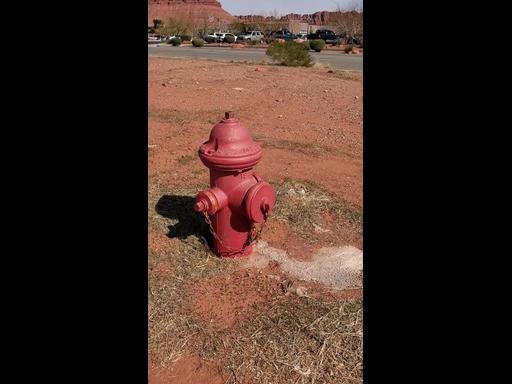
Interactive demo

Live point clouds you can orbit and zoom, rendered in the browser.

01Interactive two-view results

One representative pair for each camera-model combination, with the prediction and the ground truth side by side in the browser. Drag to orbit, scroll to zoom, right-drag to pan; the two panels share a camera, so moving one moves the other.
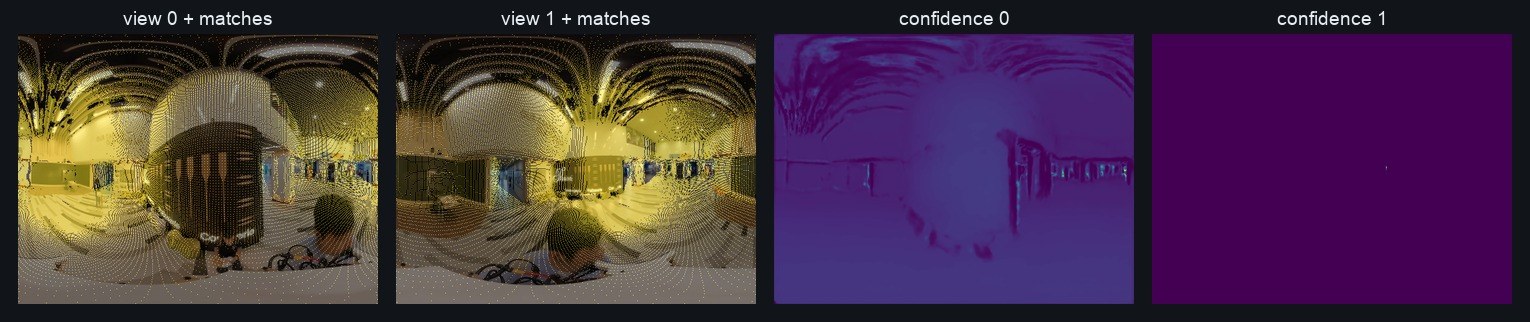
Left to right: view 0 and view 1 with their mutual-nearest-neighbour matches overlaid, then the predicted confidence maps for the two views. Bright regions are pixels whose 3D point found a close mutual match in the other view.

Values are read verbatim from the metrics.txt written by eval_two_view.py --two-view-test for this particular pair. The qualitative mode only selects a pair whose rotation and translation errors both fall below 3 degrees, so these are per-pair figures, not dataset-level accuracies. Dataset-level RRA@15 and RTA@15 for every benchmark are in Table 1 of the repository README.

Drag to orbit · scroll to zoom · right-drag to pan
CAM3R prediction

Loading…

Ground truth

Loading…

Both clouds are the fused two-view overlay: view 0 in its own camera frame, plus view 1 mapped into that frame by the predicted relative pose. They are raw network outputs with no global alignment or post-processing, subsampled to 120k points for the web. CAM3R recovers geometry up to a global scale, so each cloud is recentred on its bounding sphere and normalised to unit radius before display; that puts prediction and ground truth in a common frame and makes the shape comparison the meaningful one. The .ply files written by the evaluation script keep their original coordinates.
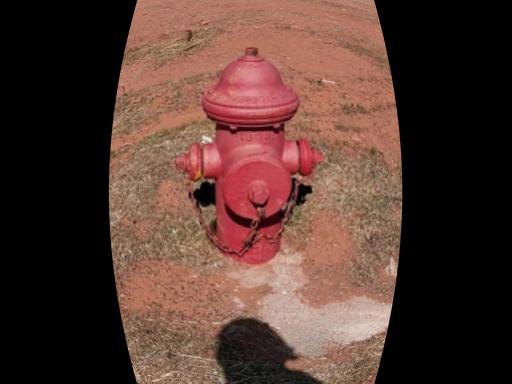
02Interactive zero-shot results

An arbitrary image pair run through eval_two_view_zeroshot.py, with no poses, no intrinsics and no dataset metadata.

Drag to orbit · scroll to zoom · right-drag to pan
CAM3R prediction

Loading…

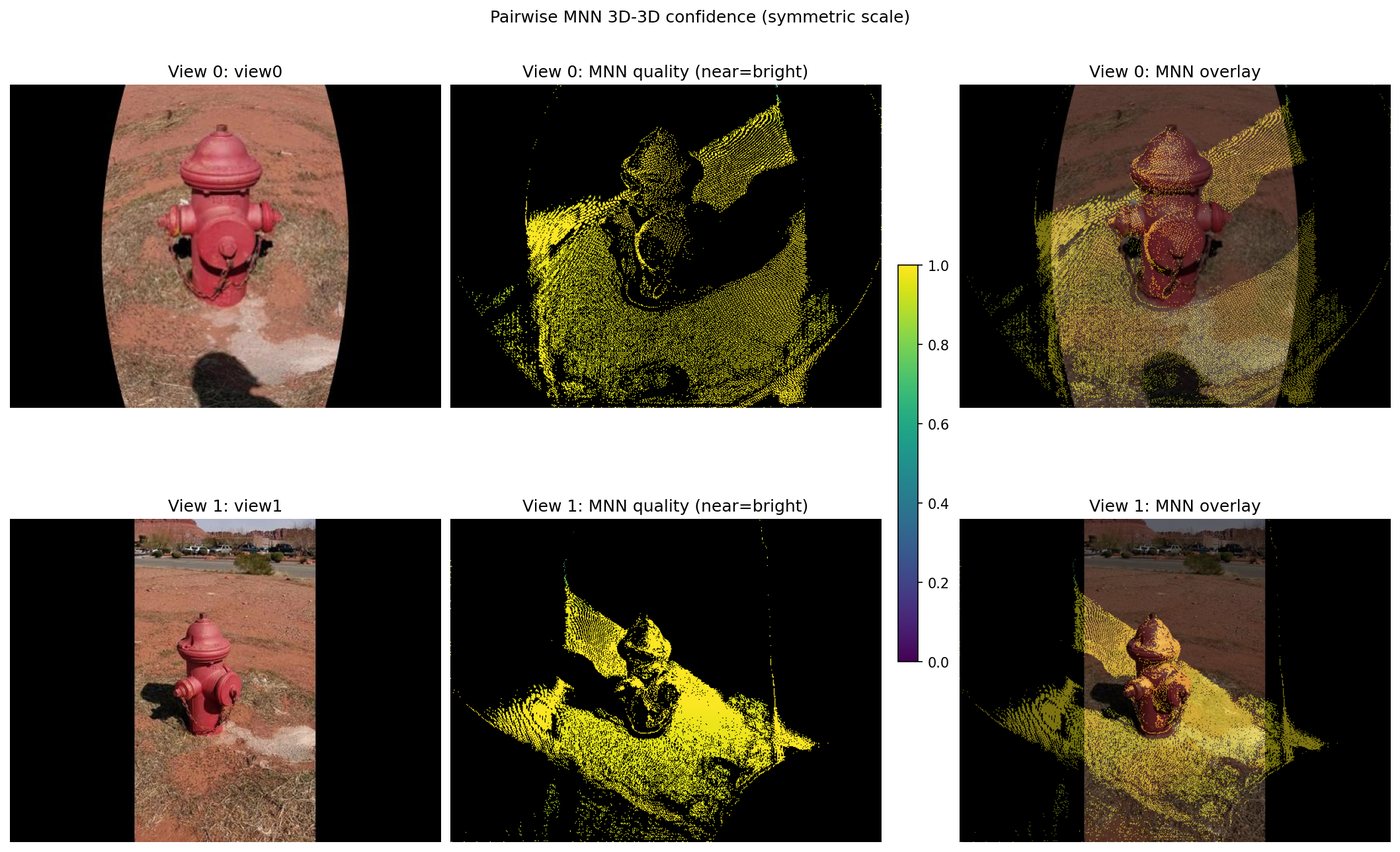
The 2×3 diagnostic panel written alongside the point cloud: each input image, its mutual-nearest-neighbour match quality map, and the two blended together.

03Multi-view reconstruction

Ray-Aware Global Alignment fuses the pairwise predictions above into a single globally consistent scene by optimising poses and per-image scales with the ray directions frozen, so points may only slide along their own rays.

Ground truth and three methods, side by side

Full-scene reconstructions, live in the browser: each panel is one whole scene fused from all of its views, not one of the two-view pairs shown earlier on this page. Pick a benchmark to swap all four clouds. The four panels share one camera, so a drag started in any of them moves all four and the comparison is always from the same viewpoint.

Drag to orbit · scroll to zoom · right-drag to pan
Ground truth

Loading…

VGGT

Loading…

π³

Loading…

CAM3R

Loading…

Each cloud is subsampled to 100k points for the web and is drawn in the coordinate frame its own method writes out, with no rotation applied, so the four panels can start at different orientations. The methods reconstruct at very different scales, so every cloud is recentred on its bounding sphere and scaled to unit radius at render time only; the .ply files keep their original coordinates.

Note. The global alignment code is not part of the current release; this repository provides the two-view network it is built on.